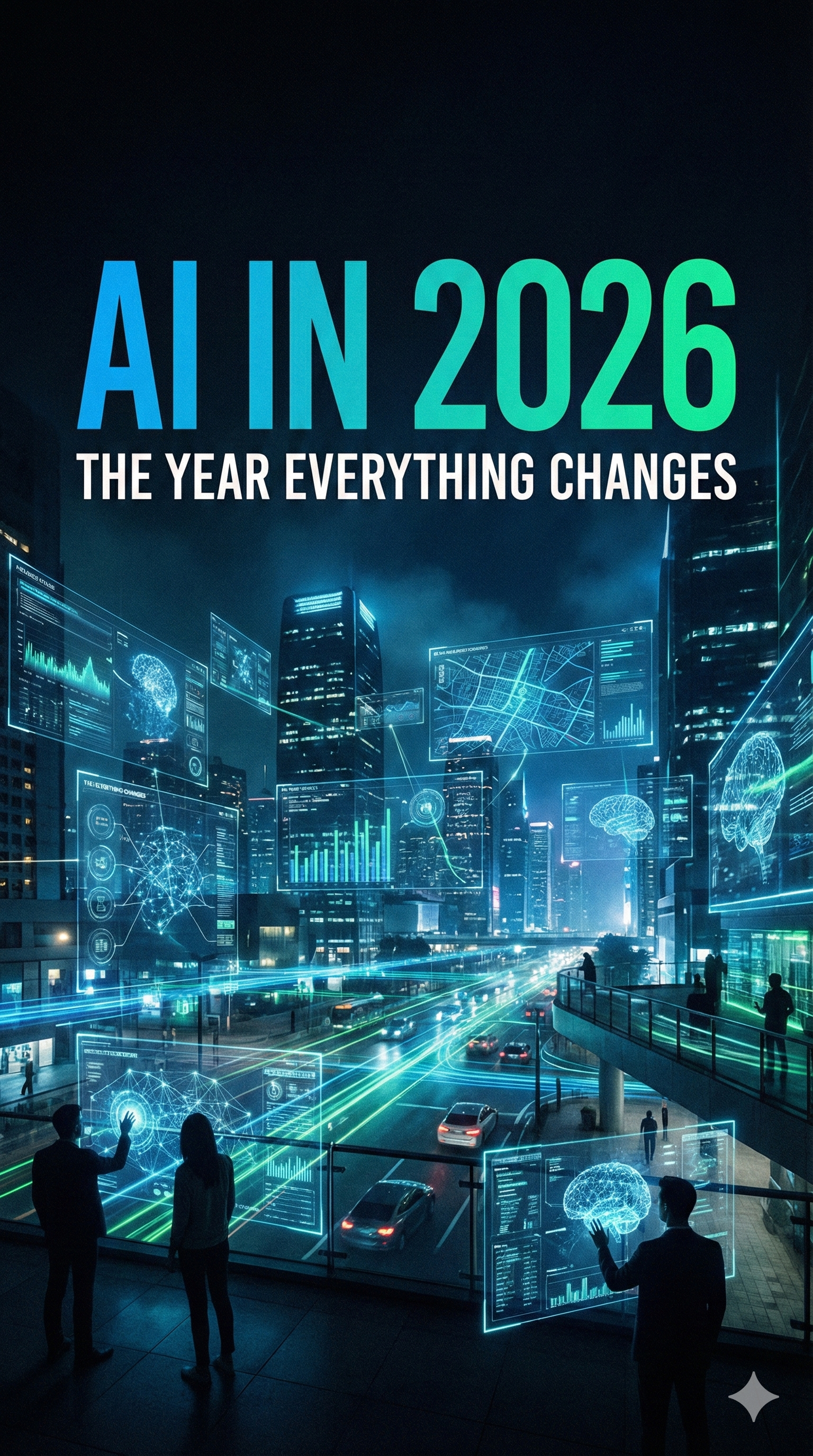
AI in 2026: The Year Everything Changes
Artificial Intelligence has been a growing headline for more than a decade, but 2026 is the year it stops being a headline and becomes a reality we live inside of. For years, people asked a simple question: “Will AI change the world?” In 2026, we finally get the answer — not through predictions or promises, but through our daily routines, our businesses, our economies, and even our personal identity. AI is no longer an assistant, a novelty, or a tool reserved for tech experts. It becomes the invisible infrastructure powering the next stage of human evolution.
And most people don’t even realize how fast the shift is happening.
AI Moves From Tool to Teammate
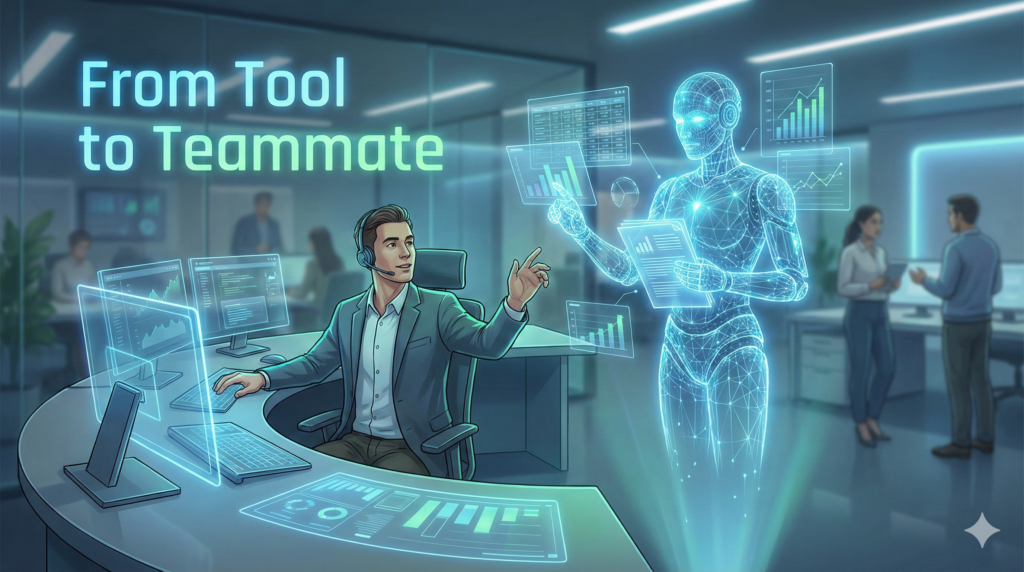
In 2026, AI steps into a new role: the silent co-worker. It writes emails before we think of them, drafts technical designs, corrects code, analyzes customer trends in real time, and even predicts operational bottlenecks before humans notice the warning signs. At work, AI is now the colleague who never sleeps, never forgets, and never misses a deadline.
Companies that once treated AI as an “optional upgrade” now depend on it the way we depend on the internet. Every team suddenly becomes a hybrid team — part human, part machine. And this shift doesn’t replace people; it repositions them. Humans go from doing repetitive, low-impact tasks to making decisions, testing ideas, and solving creative problems.
For the first time in history, an average employee can produce the output of an entire department — not because they are superhuman, but because they are augmented by superhuman tools.
Creativity Becomes a Collaboration Between Human and Machine
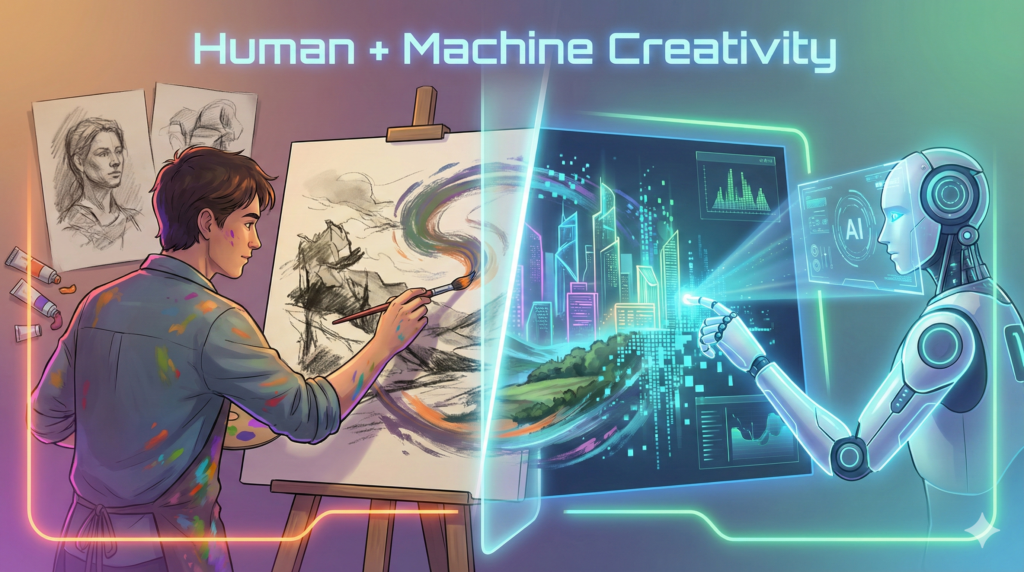
2026 marks the collapse of the barrier between creator and consumer. With advanced generative models, producing content — videos, podcasts, animations, designs, websites — no longer requires expensive equipment or years of training.
A teenager with a laptop can create a Hollywood-quality short film.
A small business owner can design a brand identity in minutes.
A teacher can generate custom educational animations tailored to each student.
Creativity becomes democratized — not because AI replaces human imagination, but because it amplifies it. You bring the idea. AI brings the execution. Together, the result is something neither could create alone.
This proves a point many feared was untrue:
AI doesn’t kill creativity. It multiplies it.
Medicine Enters Its Fastest Revolution in History
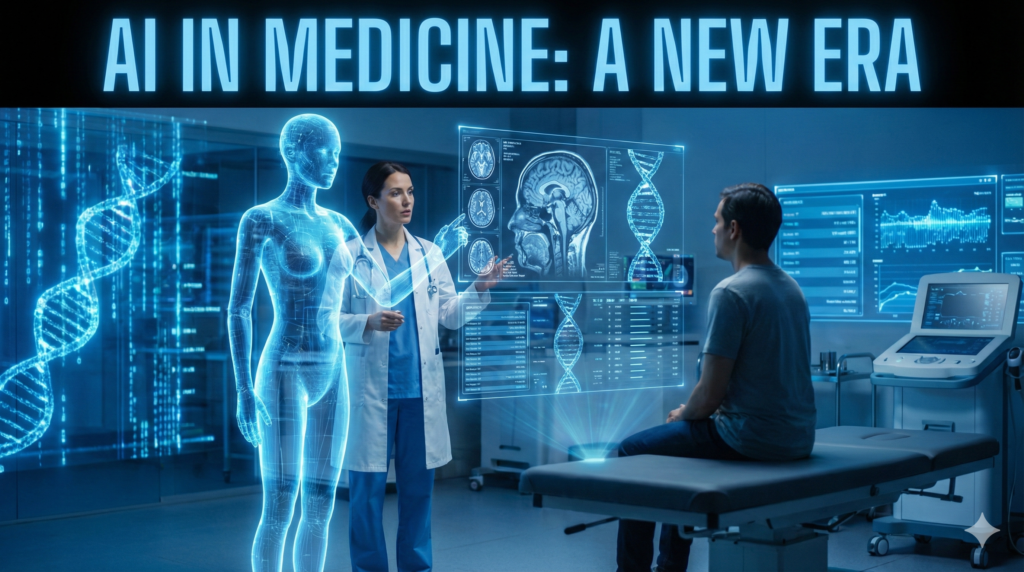
If there is one field that transforms the most in 2026, it is healthcare.
AI now detects illnesses before symptoms appear, reads scans with accuracy beyond human specialists, creates personalized treatment plans, and identifies patterns in millions of medical records instantly. Doctors don’t lose their roles; they gain new superpowers. AI becomes the microscope, the stethoscope, and the diagnostic assistant of the future.
Life expectancy begins to rise again in countries where it had stalled. Misdiagnosis rates drop. Preventive medicine becomes the new standard.
The biggest breakthrough is AI-driven drug discovery, which once took 10–15 years and now compresses into months. Rare diseases once considered impossible to treat begin appearing in medical journals with promising solutions.
Humanity is not just healing faster — it’s healing smarter.
AI and the New Global Economy
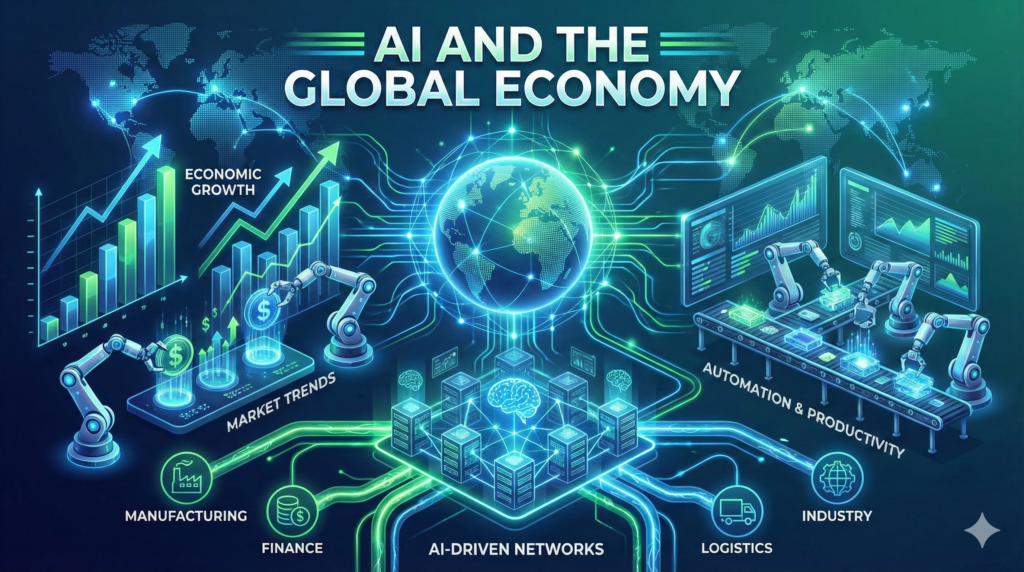
2026 is also the year AI redraws the global economic map.
Companies that integrate AI aggressively — automating processes, reducing operational waste, forecasting market shifts — grow at unprecedented speed. Startups that once needed large teams can now scale with just a handful of people enhanced by AI systems. Meanwhile, businesses unable to adapt face the harsh truth: efficiency powered by AI is no longer a competitive advantage; it’s a requirement for survival.
Entire industries evolve:
- Finance becomes real-time and predictive
- Manufacturing becomes fully automated end-to-end
- Customer service becomes AI-first, human-second
- Marketing becomes hyper-personalized, analyzing user behavior down to the millisecond
This raises an uncomfortable question:
What does “work” mean when machines can do so much of it?
The Ethical Crossroads of AI
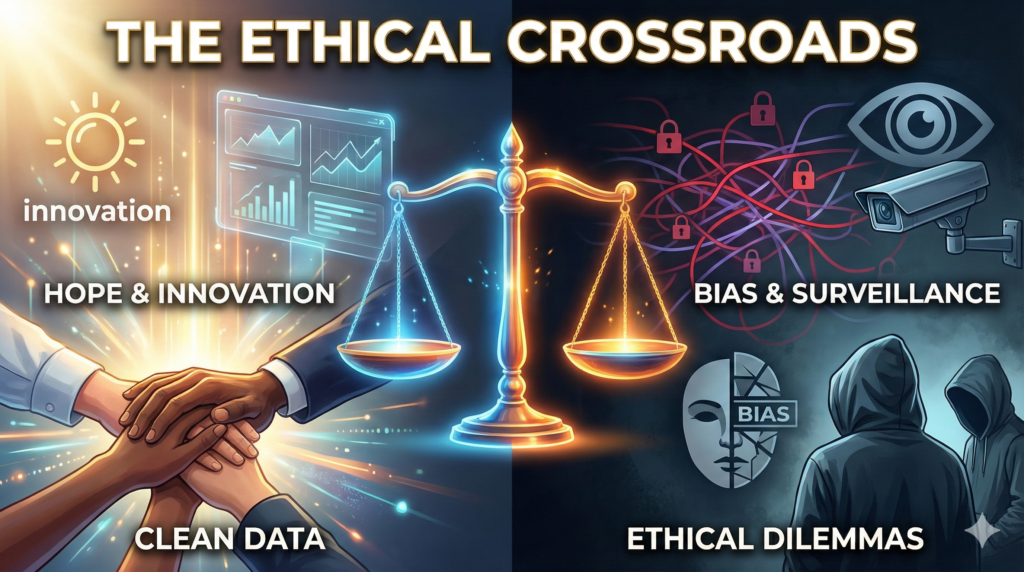
With power comes responsibility — and in 2026, the debate around AI ethics becomes louder than ever.
Governments now regulate AI the same way they regulate medicine and energy. New laws appear focused on transparency, accountability standards, bias audits, and limits on autonomous decision-making.
We realize that AI is not just a technical innovation but a social one — one that can uplift or divide societies depending on how responsibly it’s used.
This year forces us to confront deeper questions:
- Who owns the data AI learns from?
- How do we prevent AI from amplifying inequality?
- What skills should children learn in a world where AI can do 80% of tasks?
These questions begin shaping global policy, education systems, and corporate strategy.
Identity in the Age of AI
While many fear AI will erase human identity, 2026 does something unexpected: it redefines it.
We finally understand that intelligence is not a single shape. AI excels at logic, memory, and processing — but humans remain unmatched in empathy, intuition, curiosity, humor, creativity, values, ethics, and connection. As AI handles the mechanical parts of life, humans are free to explore the emotional, philosophical, and innovative parts.
Instead of competing with AI, 2026 is the year we learn to coexist with it.
The Moment Everything Changes
So why is 2026 considered the turning point?
Because this is the year AI stops being the future and becomes the foundation.
The year where:
- Work becomes faster
- Healthcare becomes smarter
- Creativity becomes limitless
- Education becomes personalized
- Businesses become more efficient
- Humans become more focused on meaning, not mechanics
2026 is not the year AI takes over — it’s the year AI takes shape.
A year we will look back on and say:
“That’s when the world shifted.
That’s when we stepped into a new era.”